Monday, March 18, 2013

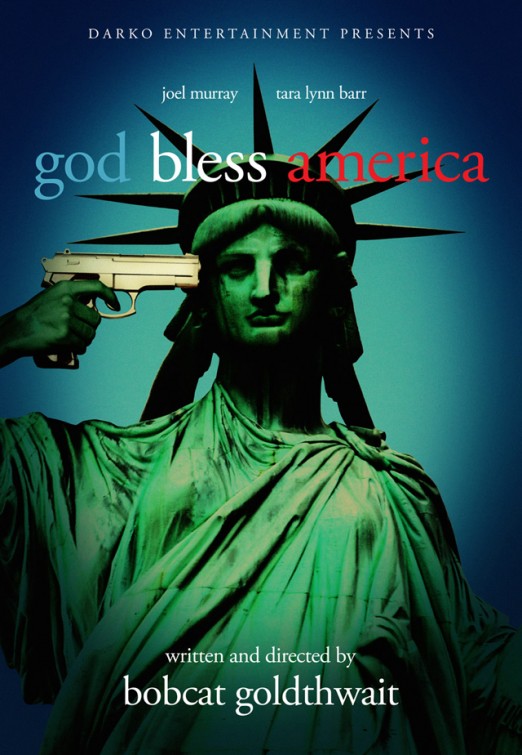
MYST #3: God Bless America


Looking for a movie to watch I googled 'most underrated movies of 2012.' After failing to find Bullhead online I settled for God Bless America. I remember thinking it looked like it would be subpar at best when I saw the trailers for it, but because the reviewer of the google site said it was good I gave it a shot. I ended up really enjoying this movie. God Bless America was outrageously violent and had a surplus of satire, but it worked well together. I thoroughly enjoyed this movie and would give it an 8.9/10. 

In God Bless America we are introduced to Frank played by Joel Murray, (Small roles in The Artist, Larry the Cable Guy) an insomnic veteran living next door to a loud, douchey family, being disgusted by the recognizable mock reality shows he's seeing flipping through the channels. The next day Frank gets laid off work for a genuine nice offer taken poorly and goes home to receive a phone call for his ex-wife that his kid, transforming into a huge brat, no longer wishes to spend the weekend with him. With all this misery compiling at once Frank is ready to kill himself, literally gun in his mouth has an epithiney instead of killing himself, he should kill the incredible spoiled girl whiny to her dad cause he got her the wrong car on a fake Sweet Sixteen type show. After doing this a similarly minded classmate of the spoiled girl, Roxy, played by Tara Lynn Barr in her first feature film, joins Frank and the two embark a cross country killing spree of other "worthy" people. Despite this sounding like the darkest movie ever, and trust me its up there, the movie is quite funny. Despite morally knowing these two are doing wrong, you find yourself agreeing with them and in fact start to root for them. 


Overall I thought the director, known comedian Bobcat Goldthwait who also directed, (World's Greatest Dad, The Man Show) did a very good job portraying his obvious cynical views of America.  This is clearly a message movie seen in the dialogue between Frank and his co-worker and throughout the movie between Roxy and him talking about the things about America they hate.  Although some of there criticisms could get to be pretty ridiculous (giving high fives, saying literally), there were a multitude of good points showing us how awful the entertainment we are seeming to turn to more and more.  At the end of the movie you don't see Frank as a bad guy, you see him almost as a martyr to try and bring back the old America, where kids weren't as spoiled and people talked about things other than what was on television the previous night.  The fact that I had to watch Zero Dark Thirty to return my patriotism to its normal level, tells you that Goldthwait got his point across.  Overall I recommend God Bless America for both its entertainment, and its unique perspective of America.  

Sunday, March 17, 2013

MYST Post #2: Brick


As recommended by Mr. D, I decided to watch Brick after I had finished my homework one night.  I really enjoyed this movie and recommended it immediately to my friends the following day.  Shot in a film noir style, adapted to a Southern California high school seems it would be like hot sauce on oreos, a terrible combination, however Brick did it perfectly.  I was captivated the entire movie and could never predict what was going to happen next.  I gave this movie a 9.0/10, a good score for an overall good movie.


Brick starts with Brendan, a young Joseph Gordon Levitt (Premium Rush, The Dark Knight Rises, Inception) answering a phone call from a panicked ex-girlfriend mentioning terms like "Brick" and "the Pin" before hanging up.  Missing the next day Brendan uses her notebook to attempt to track her down and ends up finding her dead in a sewer pipe.  The rest of Brick is Brendan following clues and immersing himself in a high school drug ring to find his ex's killer.  I would love to write more, but as it is a mystery I would hate to spoil any part of it.

As I mentioned earlier Brick is a modern day example of a classic film noir.  Complete with a morally questionable main character, a devious femme fatale, and a world filmed with crime and violence, Rian Johnson(Looper, Brothers Bloom) directed.  What really made the movie for me would be Levitt's fast talking conversions and one-liners, another noir element, like "Throw one at me if you want, hash head. I've got all five senses and I slept last night, that puts me six up on the lot of you."  A scene that was really enjoyable to watch was when he was first introduced to the Pin.  This scene is the exelfies the character of Brendan the best, not sugar coating anything and looking to get in trouble, while at the same time looking amazingly cool and smooth.

Sunday, March 10, 2013

Poster Post: Romeo and Juliet


This is the classic Romeo and Juliet story adapted for the Great Depression.  Romeo is the son of a poor movie owner, whose dad despises the banks for not giving loans to upgrade his theatre.  Juliet is the daughter of a rich banker, whose misunderstands the poor and because of it generally dislikes them.  Romeo and Juliet meet at the theatre one time and instantly fall in love despite different wealth class and parents dislike of each other.  This story is neither pro or anti banks, but rather a why can't we work together type movie.  

The genre of the movie is a romantic-drama because the children fall in love while society, represented by their fathers, is trying to stop it. 

We decided to pic MGM as our studio.  We chose this because Romeo and Juliet is a character focused movie.  MGM during the 1930's had the biggest stars and a big name for both Romeo and Juliet makes for a financially successful movie.  

For our cast we casted Jeanette MacDonald as Juliet and Robert Montgomery as Romeo.  This choice was made since both these actors were popular, young, and attractive.  We had Victor Flemming directing it since in 1934, he directed Treasure Island so he knows how to adapt classic writings into movies.  All three actors/director are a part of the MGM family which made it easy to join this movie.  We would focus on lighting showing both the dads in darker lighting with more shadows to show a stubbornness to compromise and Romeo and Juliet in positive bright lighting to show that this is the right way.  


Obviously in a explicit story both in the violence and sexual regard the Hays Code definitely affected this adaption of Romeo and Juliet.  We choose to have zero violence to uphold the Hays Code and ended the movie with Romeo and Juliet living happily ever after opposed to the double suicide.  Also there would be no sex scenes in Romeo and Juliet, only a passionate kiss during the balcony scene and another to end the movie.  This does cripple the shock-and-awe of the Romeo and Juliet story, but the Hays Code would accept it and it has a better message.

We decided to use the technology of technicolor in an interesting manner.  The movie would be black and white up to the point of Romeo and Juliet making eye contact projecting the movie to turn into  technicolor.  We did this as an artistic expression of how the whole world changes when you meet the person you're in love with.

Monday, March 4, 2013

Formal Film Study: Wes Anderson

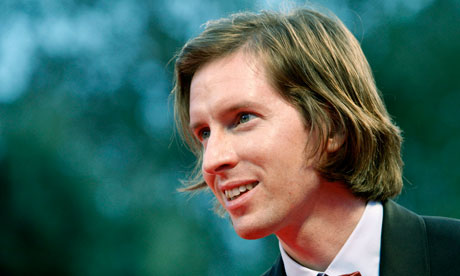
 Over the summer, I went last minute to Moonrise Kingdom, not knowing anything about the film, or who directed it.  I walked out of the theatre my mind was blown, Moonrise Kingdom was one of the most unique and enjoyable movies I had ever seen. Its blend of quirky humor and bizarre story almost had me clapping at the end of the movie (something I have frowned upon in the past).  At the time I planned on researching more to find out who directed/wrote it, but I had forgotten about doing this research.  Later finding out it was directed by Wes Anderson, I was curious to see more of his movies, but never ended up watching any.  When we were told we could pick a director for this formal film study, I knew I was going to choose Anderson immediately, and I really glad I did.

Over the course of two weeks I watched three Anderson films: The Royal Tennenbuams, Fantastic Mr. Fox, and Rushmore.  Similar to Moonrise Kingdom I enjoyed all three of the films giving them rankings of 8.8/10, 9.2/10 and 8.6/10 respectfully.  Besides the enjoyable peculiarity of all three of the films, the most common theme of Wes Anderson films, they were all very similar despite very different plots.

In all three movies Wes Anderson hardly uses and bright, vidid colors.  He tends to use darker tones in his movies and uses lots of dim lighting, however there is still a plethora of colors, most of them are toned back by the lighting.  An interesting color scheme I noticed in his  and each of the movies had a yellow tint to them as seen here in The Royal Tennenbuams, Fantastic Mr. Fox, and Rushmore in that order.


I noticed two particular camera shots that Wes Anderson used frequently throughout these movies.  One of these is a birds-eye view shot.  Seen when Ritchie Tennenbaum's wrists are cut amonst his recently shaven hair, to Mr. Fox grabbing the morning paper in front of his tree, Anderson definitly enjoys the birds eye view shot.  Kim Morgan a film critic was analyzing all of Wes Anderson's films before the release of Moonrise Kingdom, and writes "Anderson adores this shot with an almost fervid fetishization tantamount to Hitchcock's love of blonds." This rest of the summary can be seen here, and if truly interested in Anderson's work, Morgan does a much better job than I could have ever have written on Anderson's films.  I feel the birds eye view shot focuses the viewer onto the object in even a better way a close up of the object can since it's hardly used by other directors.  The other shot that Wes Anderson uses often is a dead center, shoulders and up shot of the characters face.  This allows viewers to focus on the character's emotions, and sometimes to add humor to the scene such as in the opossums face in Fantastic Mr. Fox.  Seen here are the latter shot:  

Of all the similarities between the three Wes Anderson films I watched the biggest one is the theme of dysfunctional relationships.  The most obvious case of this is seen in The Royal Tennenbuams, which is pretty much all about an outed father trying to come back into the lives of his grown-up child protégées, and his soon to be remarried ex-wife. While the other two movies are good examples of messed up relationships,  The Royal Tennenbuams is the pinnicale of it. One brother is jealous of the other, the one son hates his dad, brothers loving (adopted) sisters, this movie hilarity and occasaional sadness derive from the twisted relationships that is infused in the Tennenbuam family.  In the movie, Fantastic Mr. Fox, Mr. Fox and Mrs. Fox get caught stealing fowl at the beginning of the movie and promises if they escape, he will never steal again.  After ten years go by, Mr. Fox wild animal instincts take priority over the old promise and he begins to steal again.  When Mrs. Fox finds out  Mr. Fox and Mrs. Fox relationship turns shaky.  Another poor relationship seen in Fantastic Mr. Fox is Mr. Fox's son with the same aged out of town cousin.  The son has to fight for Mr. Fox's attention who has giving it all to the impressive cousin.  In Rushmore dysfunctional relationships are seen throughout the movie.  Max Fiscer, the incredibly pro-active and mature fifteen year old is in love with a first grade teacher at the same school and is constantly fighting with/for her throughout the movie.  Also Max Fiscer is embarrassed and lies about his fathers occupation of being a barber, at his prestigious boarding school.  These relationships are infused and often become the plot of Anderson's movies.  Anderson's parents divorced when Anderson was eight years old, he even said the divorce was "the most crucial event of my brothers and my growing up." (biography.com) This is evident in the stories Anderson depicts and the way he depicts them.  Like Anderson growing up to be a star director, all three of these movies ended happy and the relationship problems in the past.


Overall, I love the quirkiness of Wes Anderson's films and the humor that comes with it.  I look foward to seeing his new movie coming out this year Grand Budapest Hotel, and many more movies from him in the future (not Star Wars he turned that down).  


Monday, February 18, 2013

MYST Post #1: Thank You for Smoking


Thank you for Smoking is a movie that stars Aaron Eckhart (Harvey Dent in The Dark Night) as Nick Naylor, a lobbyist for Big Tobacco.  A master at debating, Naylor can convince an audience that a teenage boy with cancer should be smoking cigarettes, and thats what made watching the movie so enjoyable. Even though you should hate Nick Naylor, the way he's able to argue and twist the facts, and always win, makes him cool, and you end up rooting for him. Thank you for Smoking was directed by Jason Reitman for his first major movie ever. Since then he has directed popular movies like Juno, and Up in the Air, and while I haven't seen either of those movies (besides the clip we saw in class) and am definitely interested in seeing them now.  I personally really enjoyed the movie's satire and Eckhart's acting in it, and gave it an 8.8/10 since Thank You for Smoking was completely unique to any other movie I had watched before.  


My favorite scene in Thank You for Smoking, was when Nick Naylor, and his son drive to upstate California with tens of thousands of dollars in a briefcase to "buy off" and old Marlboro Man who has recently been diagnosed with lung cancer.  Seemingly set on denouncing Big Tobacco, Naylor again is put in a situation with no winning outcome.  However, Nick Naylor then tells the old Marlboro man has to do to blow up his public condemning of cigarettes: pour the money on the floor, get a certain member of the press, then donate all the money to charity with a 5k.  In this process the Marlboro man sees the money, has it dumped on his feet and then is told if he goes through with telling the press, he has to donate it.  Thus Nick Naylor again saves Big Tobacco's butt by suppressing a huge anti-cigarette news story.  This scene exemplifies the influence both Nick Naylor and money has on people, and it just seemed very real with great acting.

I thought the movies camerawork was good, and while the movie didn't really do anything fancy, it didn't need to since Thank You for Smoking was more dialogue than anything.  My favorite editing, was immediately before and after my favorite scene mentioned above. While driving to the Marlboro Man's house we see a shot of the backseat of the car, showing only the briefcase full of cash.  At the end of the scene in the above paragraph we don't find out if he decided to take the money or not, the next shot is of the backseat, this time without the briefcase.  While it was pretty obvious that the man was going to take the money, I thought the sequence of the shots confirmed it in a cool way.  As mentioned earlier the movie was very satirical and the whole movie seemed to be a joke, even in the more serious parts.  

*Random Fact: Not once throughout the movie do they show someone smoking.


Thursday, January 31, 2013

Review of the Reviews: The Truman Show

A couple days ago I watched The Truman Show, and was intrigued to see how movie critics thought of this movie.

I'll start with the negative review which was hard to find since I first checked metacritic, but all of the critics had given it good reviews.  I then checked rotten tomatoes and found a negative review from Jonathan Rosenbaum of the Chicago Reader which can be found here: http://www.jonathanrosenbaum.com/?p=6550   I liked his layout of the review in which he started with the things he enjoyed in the movie and progressed to the larger chunk of things he dislike about the movie, breaking each of his paragraphs with a screen shot of the movie.  Rosenbaum's main argument focused on his disbelief that The Truman Show would really be entertaining and watched in the real world.  He brings up that people would never watch him while Truman was sleeping, and personnel aspects of his life such as using the bathroom, his sex life etc. would never be shown on television.  Rosenbaum's tone is very skeptical, and his vocabulary was very readable to the average person.  His reviewed mainly revolved around the plot of The Truman Show, but also included his review of Jim Carrey, and how he did a much better job in this non-comedy than in The Cable Guy.  Rosenbaum mentioned a variety of others movies and critics in his review.  These include comparing The Truman Show to other movies of similar plot lines (living in a controlled world) and by quoting an Esquire editor.

Another review that I read on The Truman Show, was by James Berardinelli was much more positive and approving in tone.  Found here http://www.reelviews.net/php_review_template.php?identifier=178 Beradinelli argues that while it may not have hit its full potential, overall The Truman Show was very well-done.  Berardinelli vocabulary was a little more advanced than Rosenbaum's but still relatively easy to read, and I thought read better.  Beradinelli has a fuller reviews focusing on many different aspects of the movie such as plot, actors, style, and offers his critiques of the movie.  He enjoyed the plot and was glad that  The Truman Show was very original idea and enjoyed the mockumentary style the movie was shot in.  As well as Rosenbaum, Beradinelli also mentioned past movies similar to The Truman Show, and mentioned how Jim Carrey did well in his first non-goofball movie. 

In Rosenbaums review I really agreed with that we should, "applaud Jim Carrey's determination to move beyond his rubber-faced antics...especially since he was slapped down for presuming to do that in The Cable Guy"  As a kid, Ace Ventura: Pet Detective was always one of my favorite movies, and recently fell in love with him in Eternal Sunshine of the Spotless Mind, I might have a bias towards enjoying Jim Carrey's work.  I caught the end of The Cable Guy and it looked like a super weird movie from the last fifteen minutes, but I like how Rosenbaum thought that Jim Carreys performance was good, and still gave him a shot after Carrey failed taking a more serious role in The Cable Guy.  I thought Jim Carrey was great as Truman, he was very believable in his reaction of finding out his stardom, and relatable from the opening scene.  I agreed with Beradinelli's line that "Most movies today run far too long, but  The Truman Show ran too short."  He goes on to say he was left curious how certain aspects of Truman's life would be televised, and he wished it went further into that.  I totally agree I would have liked to seen maybe ~20 minutes more of him growing up, more "normal days" etc.  These where the things that made the plot of his own television show people walked everyday interesting and funny to see.  Its a little ironic that I agreed with a positive thing in the negative review of The Truman Show and more of a negative thing in my positive review. 

I would have thought Beradinelli's review would have been more convincing.  It was short, and sweet he got right to the point.  While he does mention some things it fell a little short in,  Beradinelli frequently says things like "[The Truman Show] deserves high marks" and is a "welcome surprise".  Phrases like those make me want to watch a movie instantly, as it shows the movie is good.  His diction also won me over, as he wrote in a style that I enjoy.  I didn't like how Rosenbaum focused mainly on plot flaws of the movie and how uninterested the world would really be in a show like The Truman Show, because its a movie so the writers can have some creative leeway with it.  

In a review I look for a spoiler-free summary of the plot that only hits the basics, since I like to know as little as possible going into watching a movie.  A review of how the prominent actors did compared to previous movies they have been in.  If applicable a analysis of hidden meanings or messages the director was trying to hint at, as I often overlook these.  Then the opinion of whether or not the critic enjoyed the film or not and what parts they liked/disliked.  This creates a good review of the movie that allows me to become interested in the movie, and then can go back to the same review later after having watched said movie.  


Wednesday, January 23, 2013

Film Intro Survey

1.  I honestly thought about this for a while and couldn't think of the first movie that made a strong impression on me.  Maybe Mars Attack when I was five and had nightmares for a week afterward.
2. My favorite genres are fantasy, gangster/crime, war and action/adventure.
3. My least favorite genres are romance, musical and silent.
4. My favorite movies are American History X, Eternal Sunshine of the Spotless Mind, The Dark Knight, Moonrise Kingdom and City of God
5. I would say a good movie has a well written script, has lovable characters, keeps my on the edge of my seat, and has me thinking about the movie the rest of the day/the next day.
6. While I couldn't think of many movies that I straight up hated I thought The Avengers was totally overrated, The Boondock Saints II was terrible to the first one, and I thought Tron: Legacy was just bad.
7. Cheesy lines, characters I have a hard time bonding with and predictable endings.
8. Taritino and Nolan are my two favorite directors.
9. Edward Norton, Leonardo Dicaprio, Gary Oldman, Natalie Portman, Bill Murray are my favorite actors/actresses.
10. Casablanca, Pulp Fiction and Requiem for a Dream are all important films people should watch.
11. Casablanca and 12 Angry Men are my favorite old movies.
12. Moonrise Kingdom has been my favorite movie released in the past 2 years.  It was funny, quirky had great acting from some of my favorite actors and took me completely off guard.  I would recommend it to anyone.
13. The next movies in my queue include Apocalypse Now, The Royal Tennebuams, Kill Bill Vol. 2, Monsters University and The Great Gatsby